
In its 65 years of existence, grounded on the principles of a Reformed Christian Worldview, UPM has been recognized as a community serving Higher Education Institution (HEI) and as a Confessional institution. Its activities touch the most diverse areas of human knowledge.

Institution Score (CI) is the score given by the Federal Ministry of Education (MEC) to the set of academic activities, its support services and infrastructure. The General Course Index (IGC) is a weighted average of the scores of undergraduate and postgraduate courses of the Institution. The Course Score (CC) is the score given by the Ministry of Education to undergraduate courses, based on face-to-face and on-site assessments. The Preliminary Course Score (CPC) is calculated in the year following Enade exam (National Exam for Higher Education) and it is based on the performance of students, on faculty, infrastructure and didactic-pedagogical resources, among other inputs. The following table presents current UPM assessments.


97%
of courses rated 4 or 5 stars*
By Student Guide 2018 –
Editora Abril, with emphasis on the courses of Administration (Higienópolis), Biological Sciences Licentiate Degree, Accounting Sciences, Law (Higienópolis), Electrical Engineering, Language and Literature Bachelor's and Licentiates' Degree, Nutrition, Pedagogy and Information Systems

12.7 thousand Internship contracts registered between December 2016 and October 2017 at the three campi of UPM
UPM has expanded its internationalization activities through educational agreements with several institutions of higher education abroad.
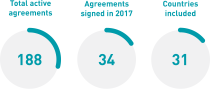
Percentage in relation to the total amount of firmed accords
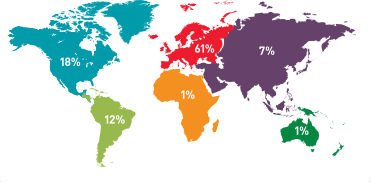
North America
South + Central America
Europe
Africa
Asia
Oceania
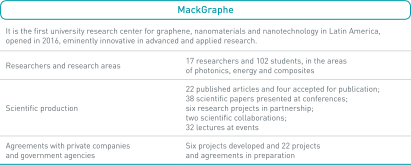
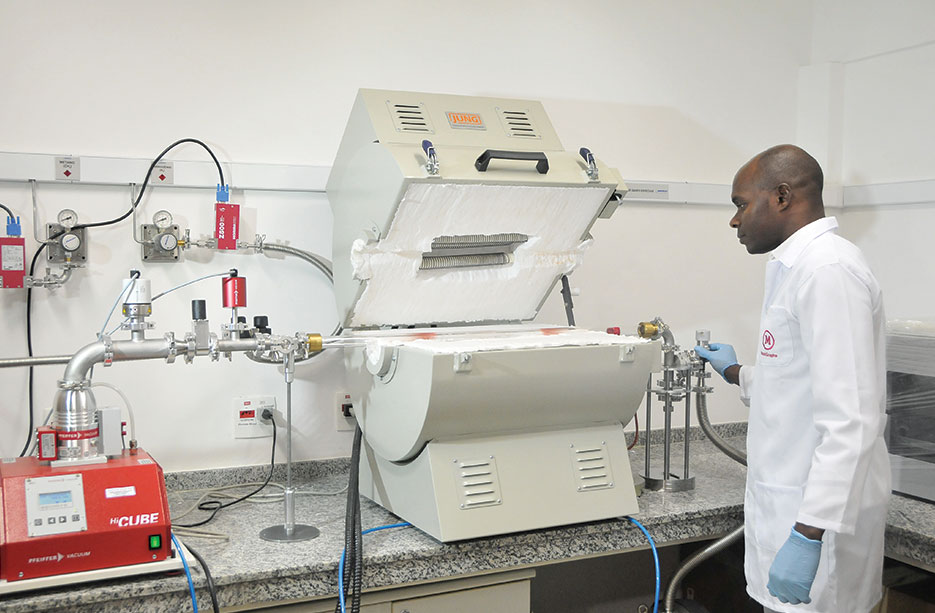
The Mackenzie Research Fund (MackPesquisa), a division of the maintaining institution (IPM) that funds and promotes research at UPM, observed an increase of 11% in the number of projects submitted in 2017, jumping from 119 to 132, as well as a significant improvement in quality of the proposals for grants. In the year of 2017, there was also the reallocation of resources to further support the internationalization process through the postdoctoral fellowship and for the reception of a visiting professor.


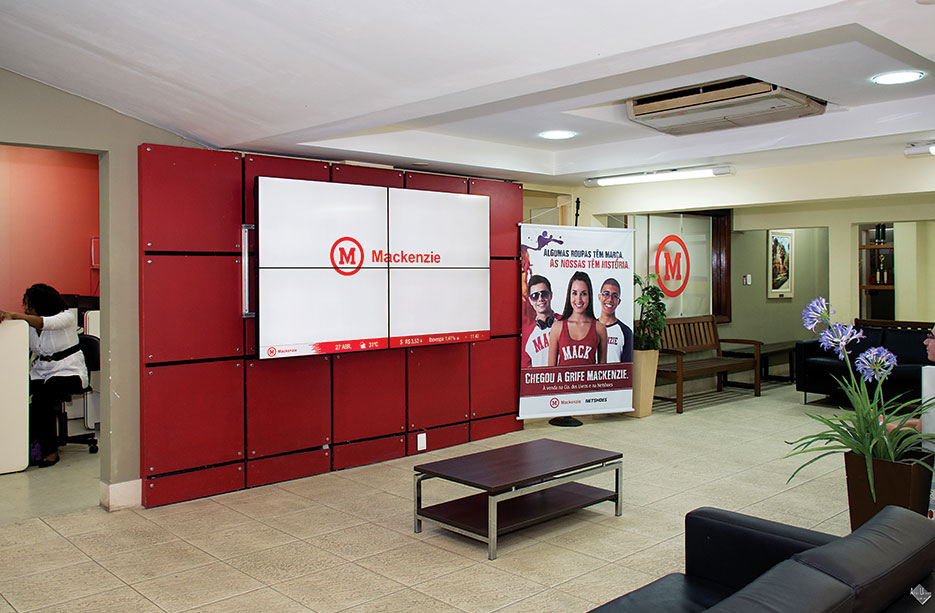

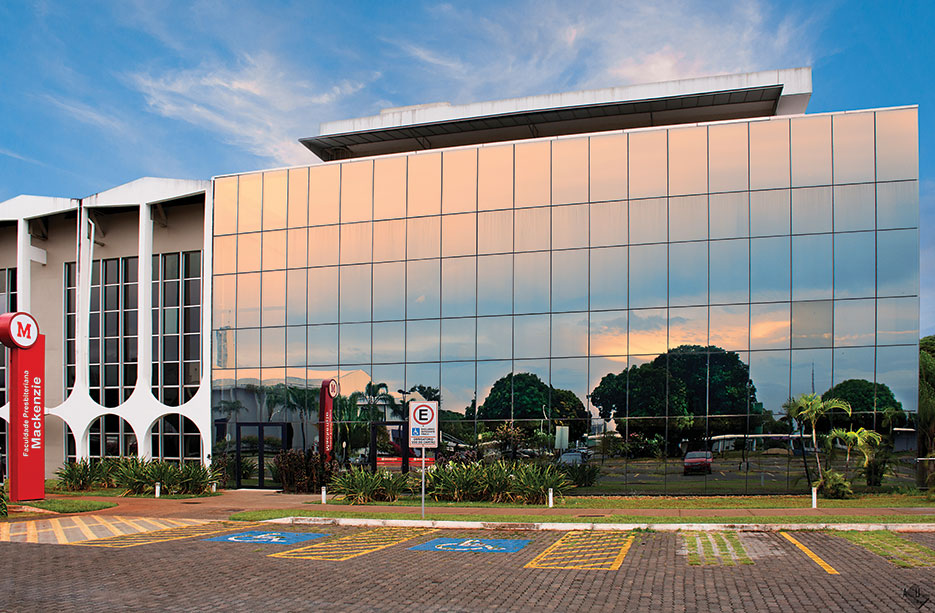
Basic Education comprises four school units of Mackenzie Presbyterian Schools – São Paulo, Tamboré, Brasília and Palmas – and Mackenzie Presbyterian School for Youth and Adult Education – AEJAMack. The units bring together about 8,500 students, 501 teachers and 334 direct assistants.


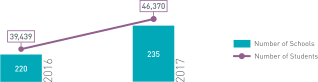
Mackenzie Teaching Systems include the Mackenzie Teaching System (SME), of explicit Confessionality, and Educational Mackenzie (ME) of implicit Confessionality. In the year of 2017, 268 partner schools and 49,379 students have used the materials, an increase of 12% and 21%, respectively, which indicates the reach of the Mackenzie educational philosophy in the country.
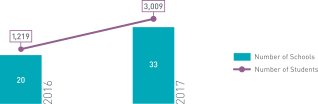
Mackenzie Solutions is a Business Unit that works with special and consulting projects, research and development, attraction of students for in-company and multi-company corporate education, prospecting of distance education poles and management in the lease of spaces of the Institution.
Mackenzie Solutions revenues reached R$35.5 million in 2017, a growth of 157% in the period 2013-2017.
 Nº
Nº
